Education · · 3 min
How iris recognition actually works
A near-infrared camera images the iris’ random texture, which is encoded into a compact binary template — not a stored photo — and matched by Hamming distance.
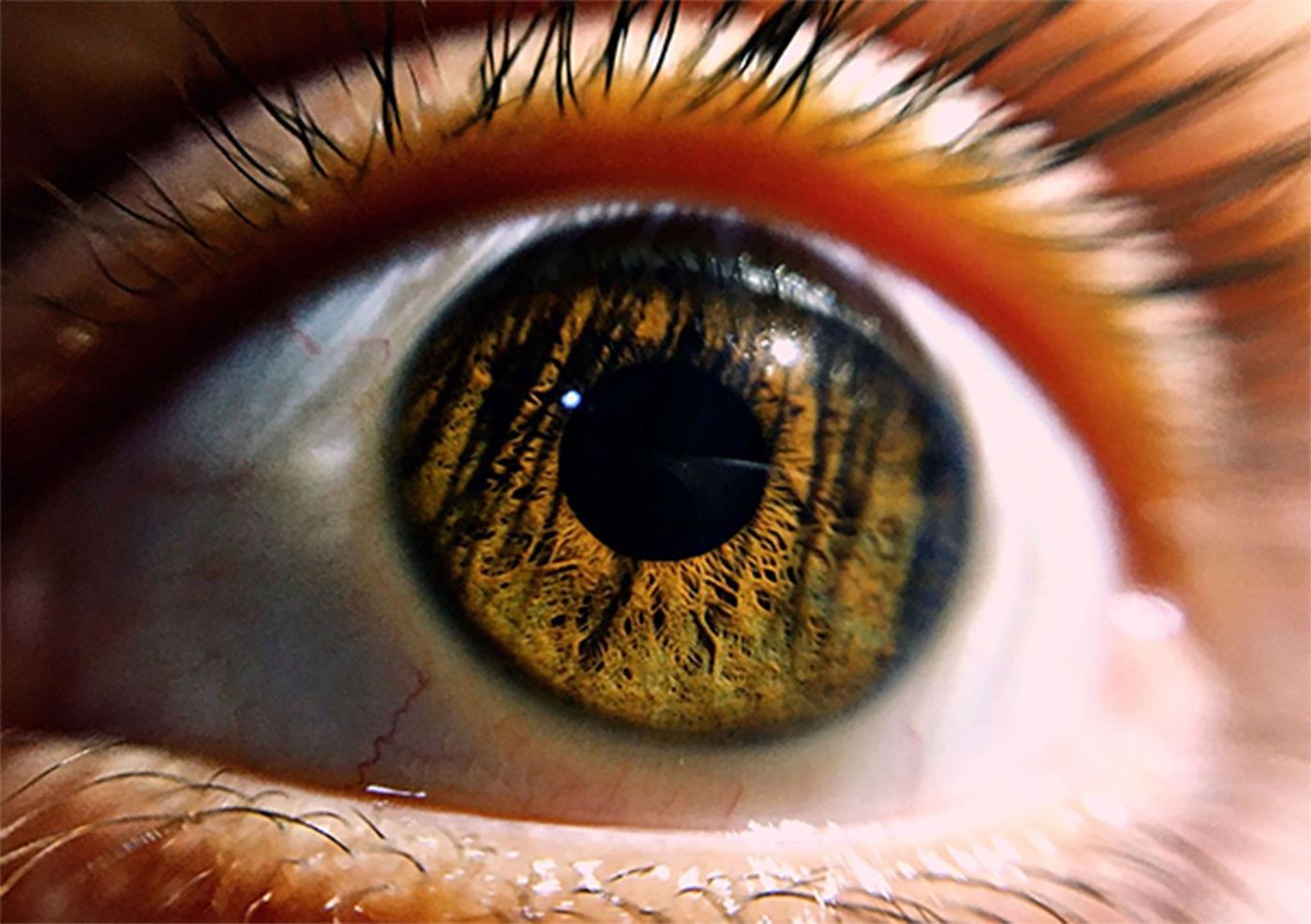
Iris recognition reads the dense, near-random texture of the iris — the colored ring around the pupil. Unlike a face or a fingerprint, that texture is fully formed in early childhood — by roughly ten months of age — and then stays remarkably stable over a lifetime, which is what gives the iris its high discriminative power.
A dedicated camera images the eye under near-infrared light. The system localizes the iris, masks out eyelids, lashes and specular reflections, and “unwraps” the ring into a normalized strip so that pupil dilation does not change the result.
That strip is filtered and encoded into a compact binary template — often called an IrisCode — rather than stored as a photograph. Two templates are compared by counting the fraction of bits that differ (a Hamming distance); a low distance means a match.
Because the comparison is a fast bitwise operation, one iris can be checked against very large galleries in milliseconds. NIST’s independent IREX program tracks how well commercial matchers do this across standardized, interoperable iris imagery.